India has had a profound cultural impact on Southeast Asia, especially in regards Hindu religion and Buddhism, which has led to the region being called Further India, Greater India and the Indosphere. Great temples have been built in this part of the world over the centuries and Hindu and Buddhist communities still remain in each country.
The Buddha was born Prince Siddhartha Gautama probably in the sixth century BCE into the Shakya clan, which is why he is sometimes referred to as Buddha Shakyamuni, “Buddha of the Shakya clan.” “Buddha” means literally, the “awakened one,” or “enlightened.” Kapilavastu, either in present-day Tilaurakot, Nepal or present-day Piprahwa, India, was the Shakya capital.
The historical Buddha, if such a person lived, probably received his ideas from among the five Upanishads, a type of Hindu scripture, written at the time. He streamlined Indian philosophy into a practical system of personal development. His disciples followed a strict oral tradition of his sermons (Pali Suttas, Sanskrit Sutras) and rules for monastics (Vinaya) until these were written down within the first century after the master’s death.
Siddhartha Buddha became a mendicant after abandoning his life as a prince. The first followers of Buddha, following his example, pursued no vocation and settled in no permanent home. They wandered from village to village, begging for alms, practicing meditation with the ultimate goal of enlightenment. The Buddha himself established the first order of monks, called Bikkhus, and later the order of nuns, or Bikkhinis.
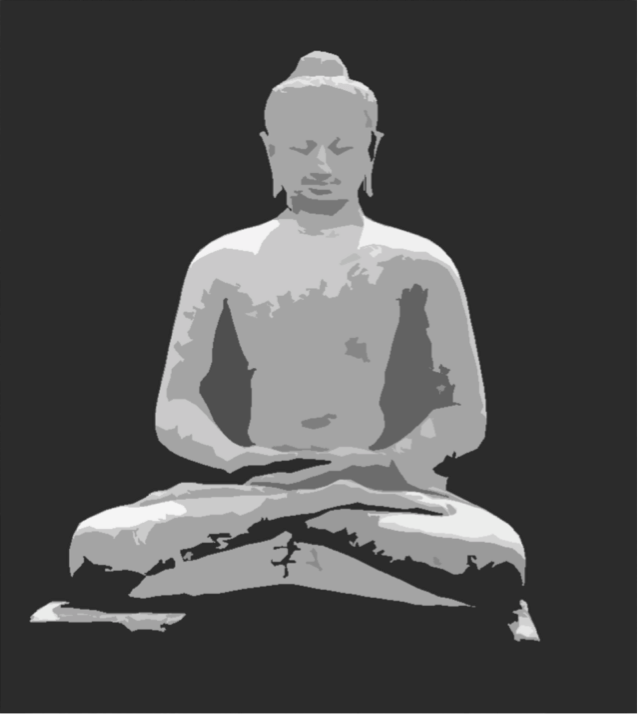
During the Indian monsoon season these monks gathered together into a sangha, or community, for survival. In the first five centuries, thousands of monasteries developed in India to house monks, teach the Dharma and serve as temples for religious work for laity. In the third century BCE Buddhism split into two branches, the more conservative being the Theravada forest tradition, the more innovative calling itself Mahayana.
Around the eleventh century, the Theravada tradition rooted itself in Sri Lanka, Burma/Myanmar and Thailand, spreading to Laos, Cambodia, Indonesia, Philippines, and Vietnam. The Mahayana tradition took root in China, Korea, Vietnam, Japan and Singapore. A later branch of Buddhism, known as Vajrayana, was adopted in Tibet, Malaysia, Indonesia and Philippines.
My intention is to one day make the pilgrimage to Lumbini in Nepal, where by tradition Siddhartha Buddha was born, Bodh Gaya, India, where he was enlightened, Sarnath or Deer Park, where Buddha preached his first sermon and Kushingara, where the Buddha died. I would also enjoy visiting Sri Lanka, which had a central role in the preservation of Theravada Buddhism, and Tibet, where Vajrayana bloomed to its fullest extent. There are many, many temples throughout the Asia that really ought to be seen and experienced.
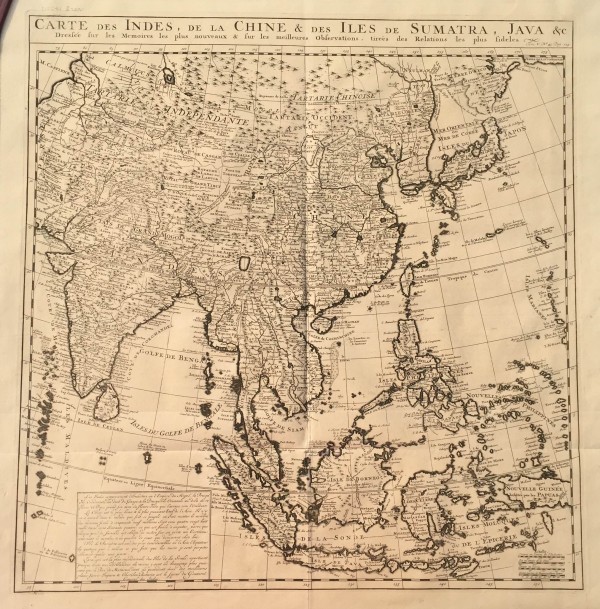
The islands that form what is today called Indonesia, especially the two main islands, Java and Sumatra, had trade relationships with both Indian and Chinese peoples for several centuries before the Common Era. Indian culture and religion appeared in the Indonesian Archipelago as early as the first century CE. Hindu and Buddhist kingdoms dominated Indonesia for about 500 years, during the “Golden Age” of Indonesian history.
From the 7th to the 13th centuries the Buddhist kingdom of Srivijaya on Sumatra rose to become a great empire. From the 8th through the 10th centuries the Buddhist Sailendra and Hindu-Buddhist Mataram kingdoms rose and fell on the island of Java. The Hindu Majapahit kingdom ruled most of Indonesia in the 13th century. During this century Islam was first introduced to the islands and by the 16th century it became the dominant religion in Java and Sumatra.
Bali is a remnant of a time when the syncretic Hindu-Buddhist tradition dominated the whole region of South-East Asia. Whereas Islam is today the majority religion over the whole of the Indonesian islands, about 83% of the Balinese population are practicing Hindus. The Balinese Hindu temple is called a pura, and is constructed according to very specific traditional religion-based rules.
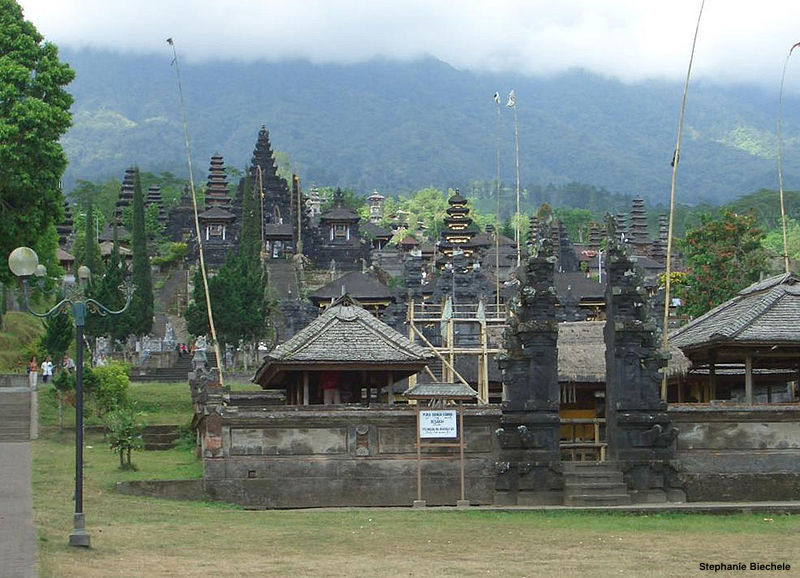
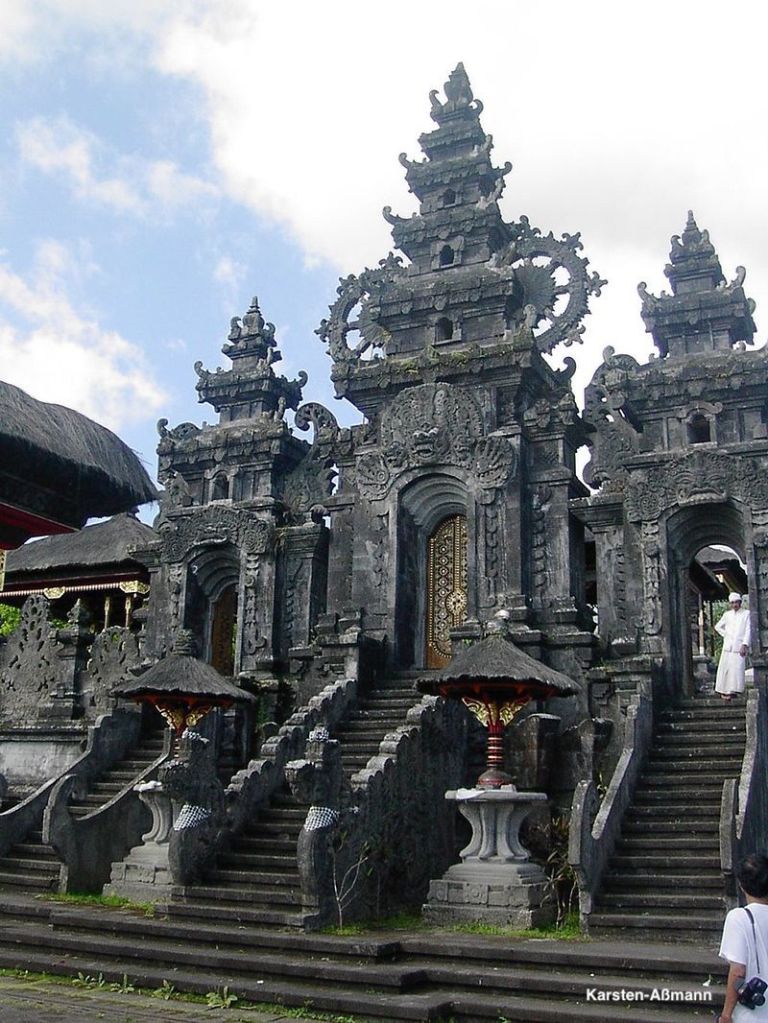
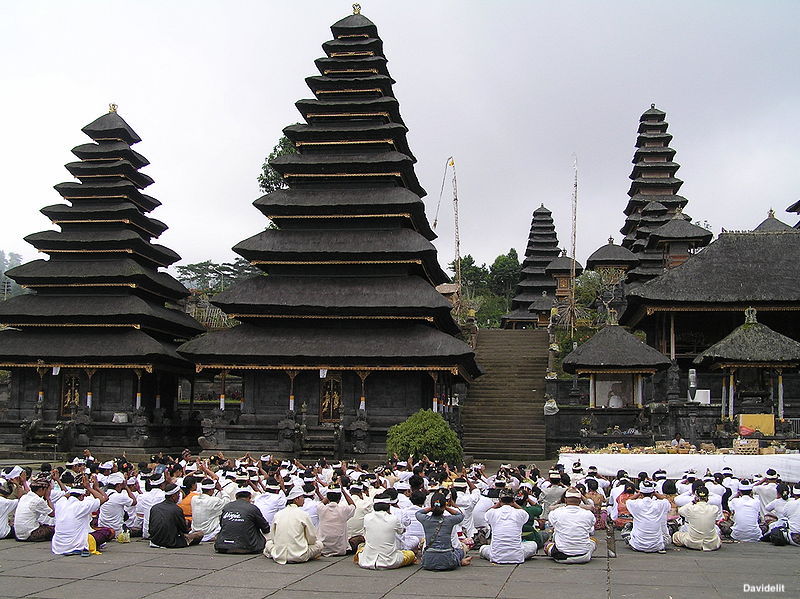
My photos of Besakih Temple are in storage, so I will make due with a few pics from the public domain. The Besakih Temple complex sits on the slopes of the volcano Mount Agung, which is the highest point in Bali. The location has been a holy site since prehistoric times and a Hindu place of worship since the 13th century. With twenty-three temples, the complex is the largest, and considered to be the most sacred, pura in all of Bali.
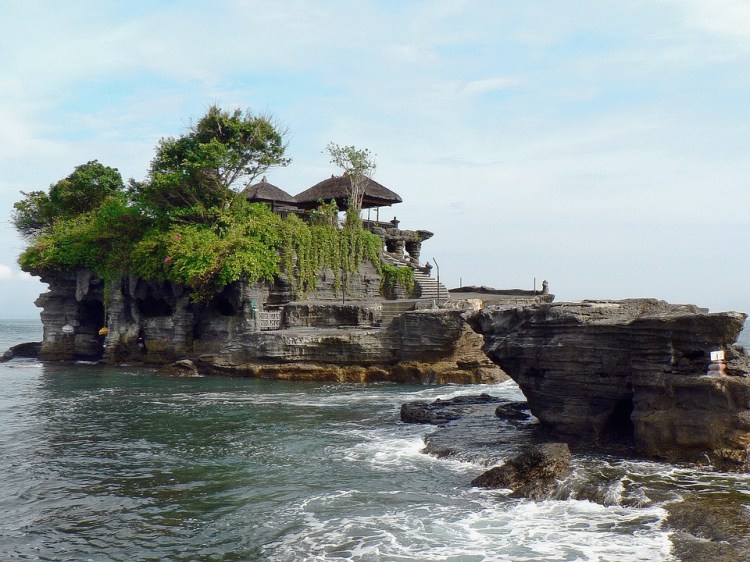
Tanah Lot Island, a small piece of rock off the shore of the island of Bali in Indonesia, is home to the Pura Tanah Lot, or Tanah Lot Temple. Tanah Lot means “Land in the Sea.” The temple, one of seven sea temples surrounding the island, was built several hundred years ago as a shrine to the Balinese god of the sea. It is also a popular Hindu pilgrimage destination.
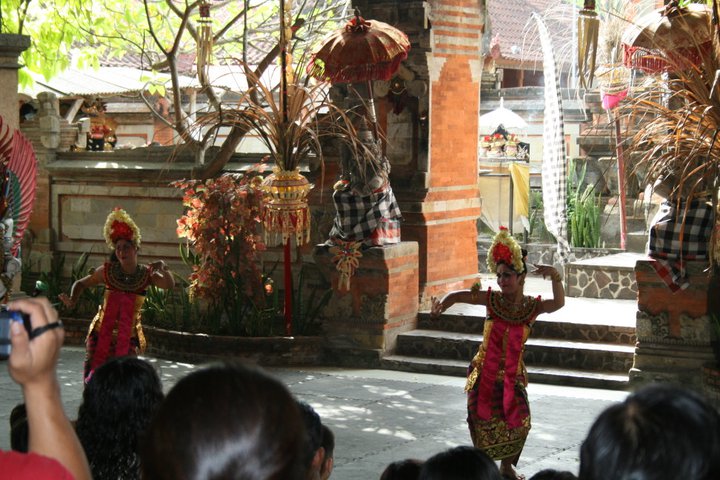
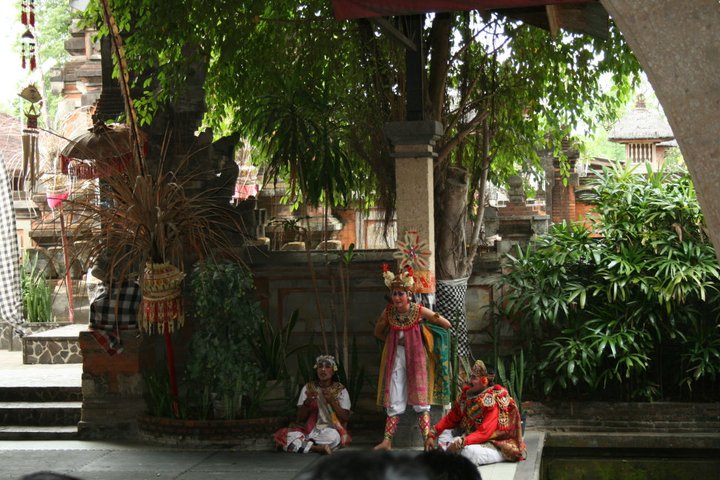
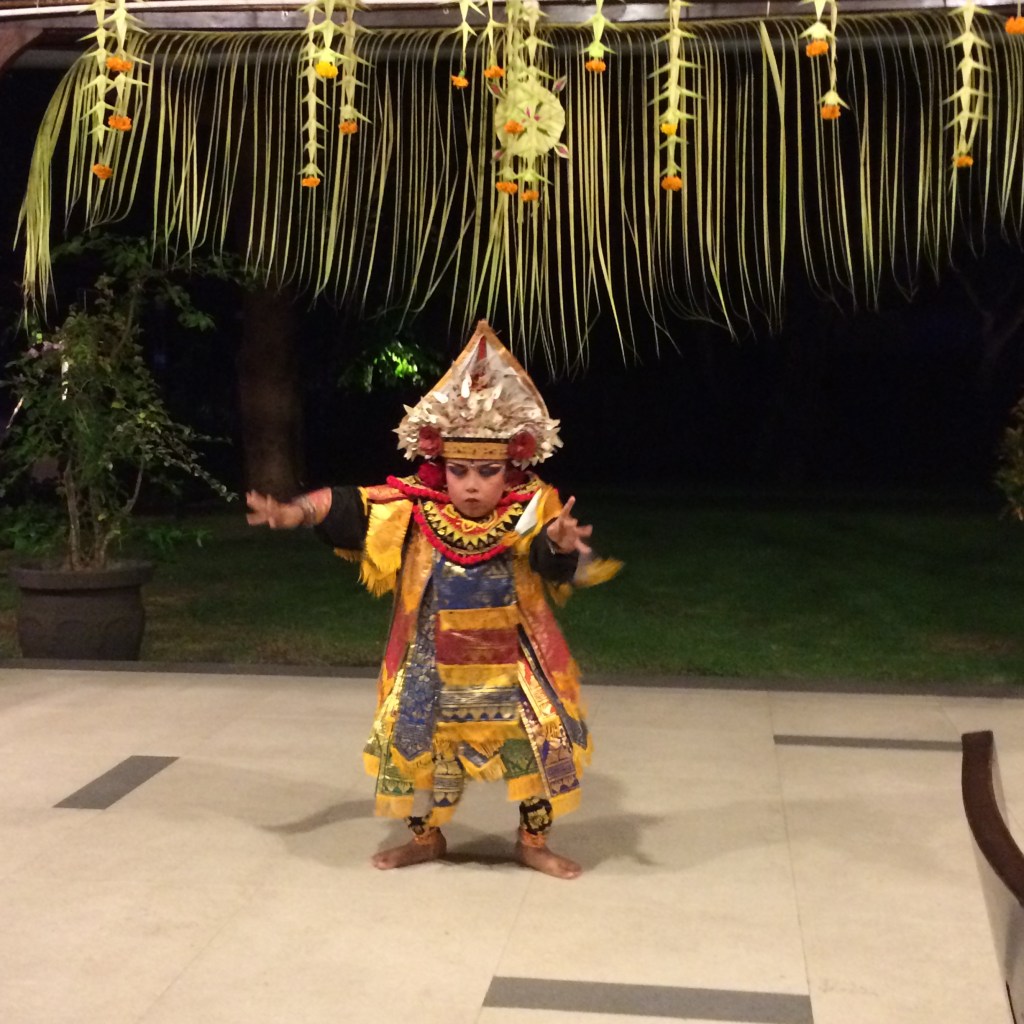
Traditional Balinese Hindu public rituals are amazing to observe. They are impressively colorful and usually musical, often with elaborate dancing and drama plays commemorating ancient religious myths and legends. Celebrations may be staged in temples or even on luxurious hotel property.
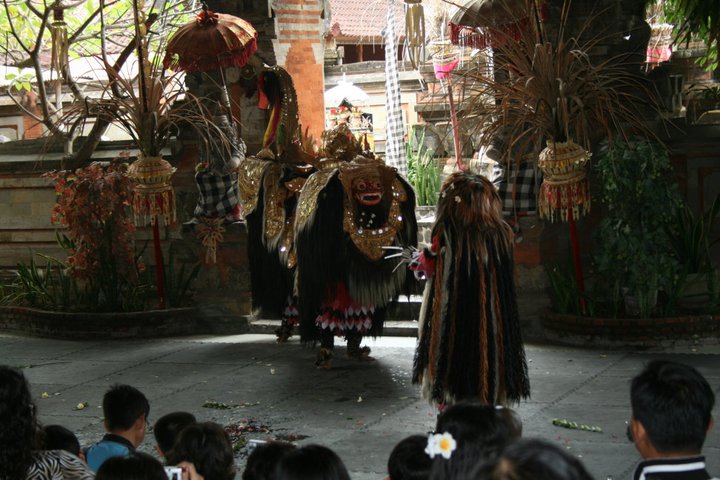
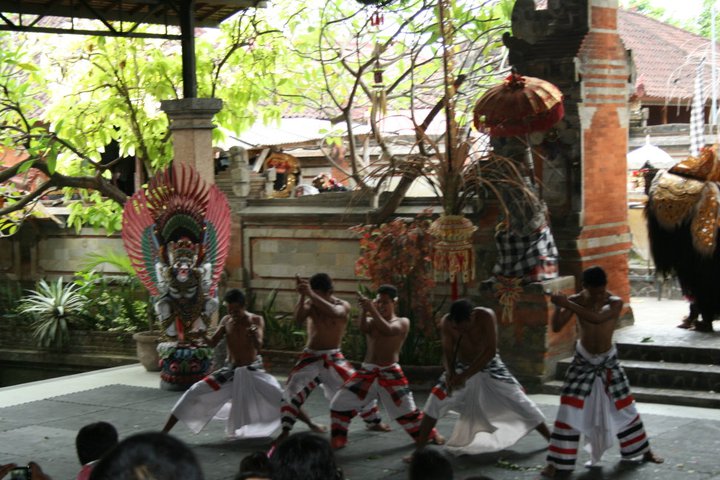
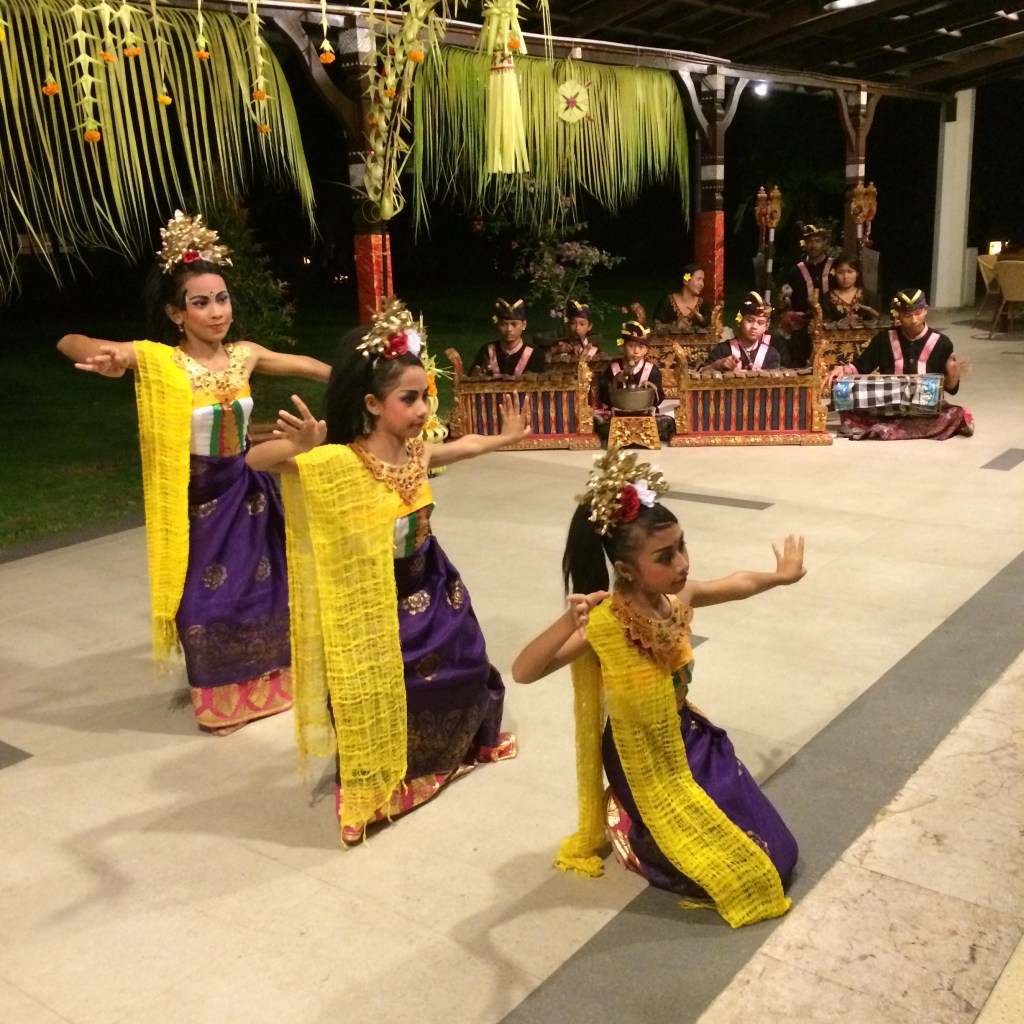
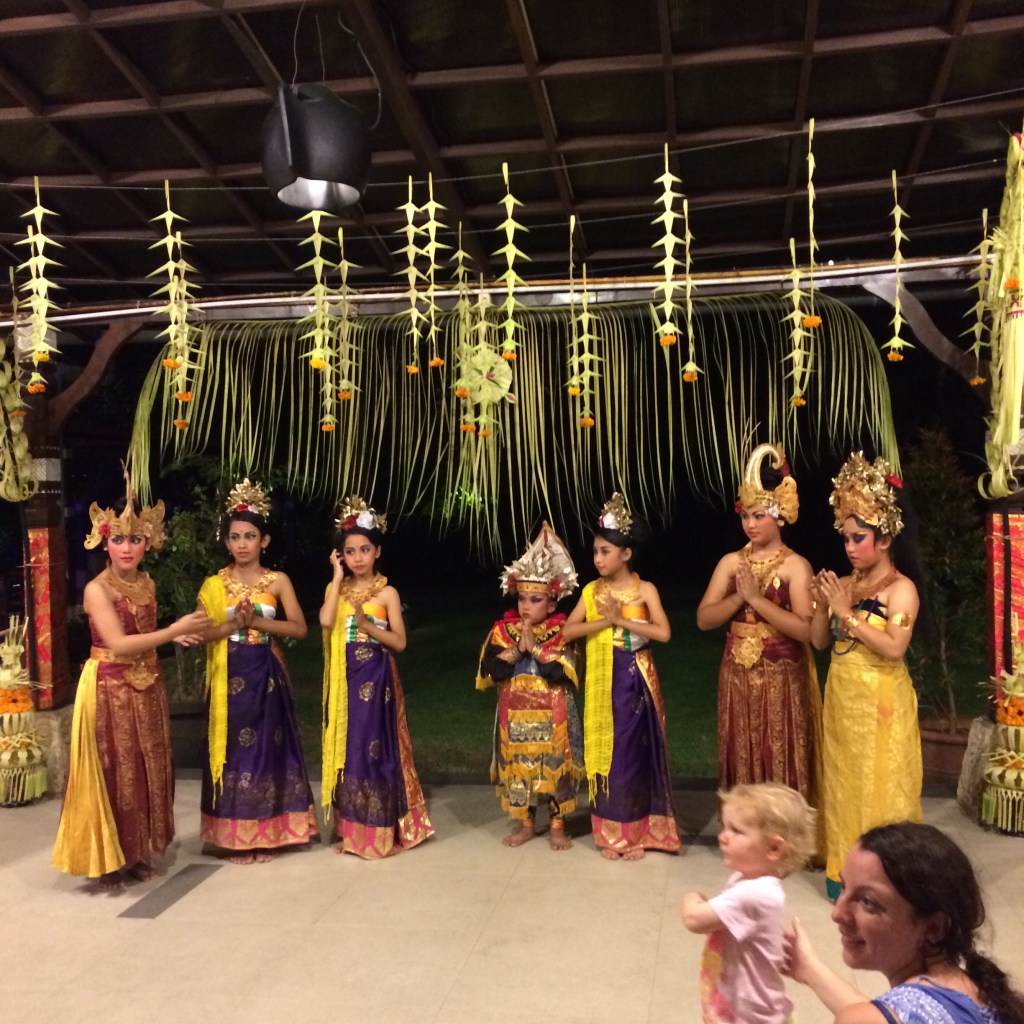
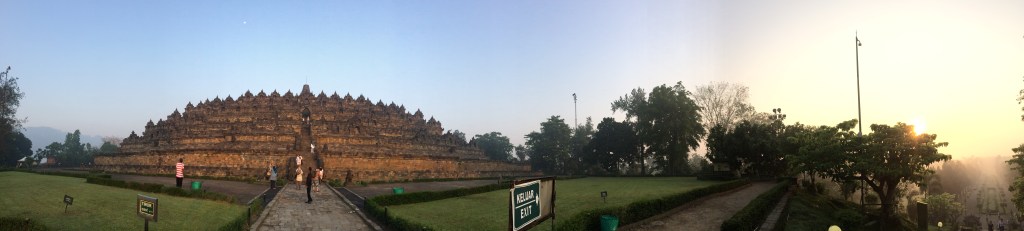
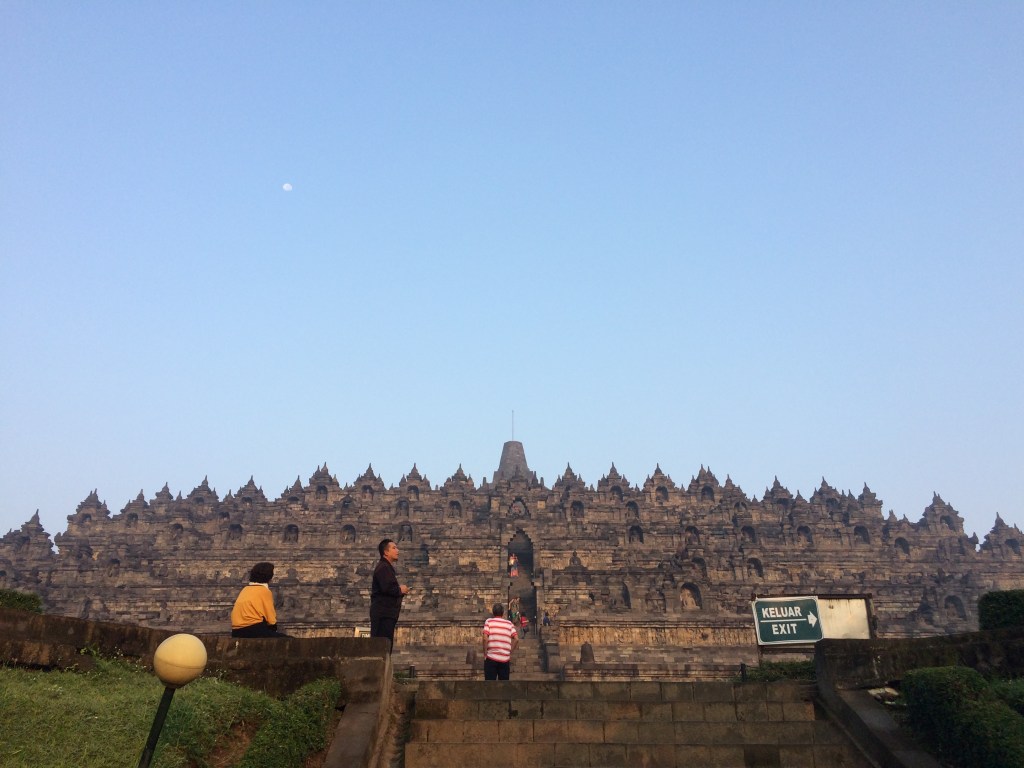
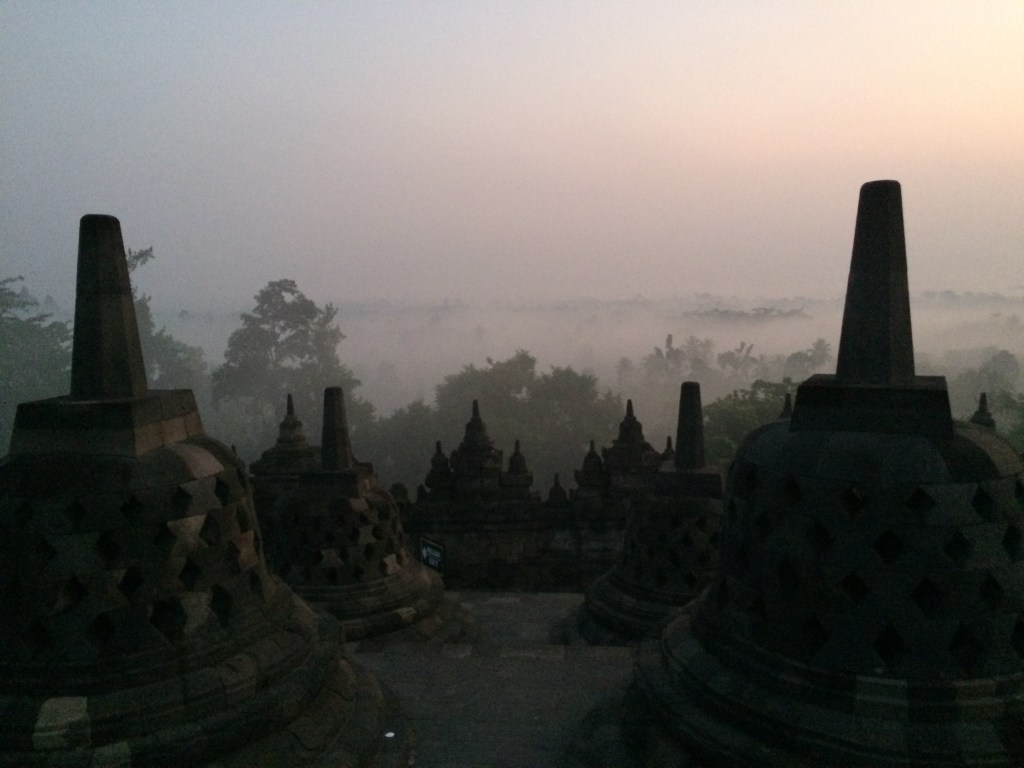
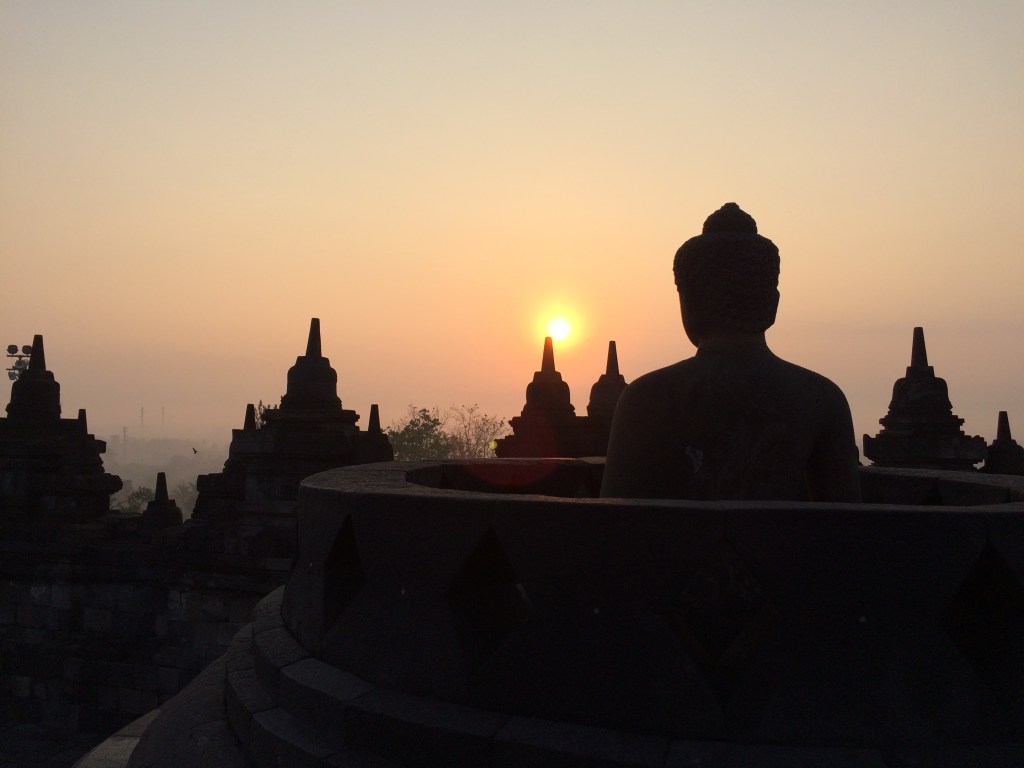
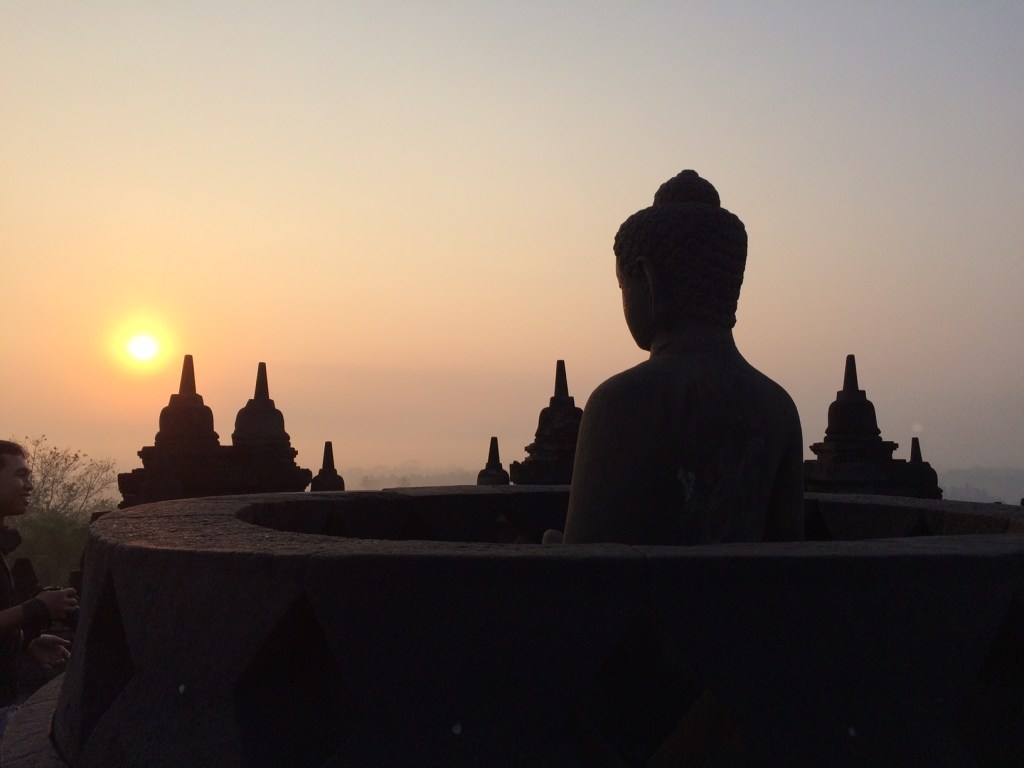
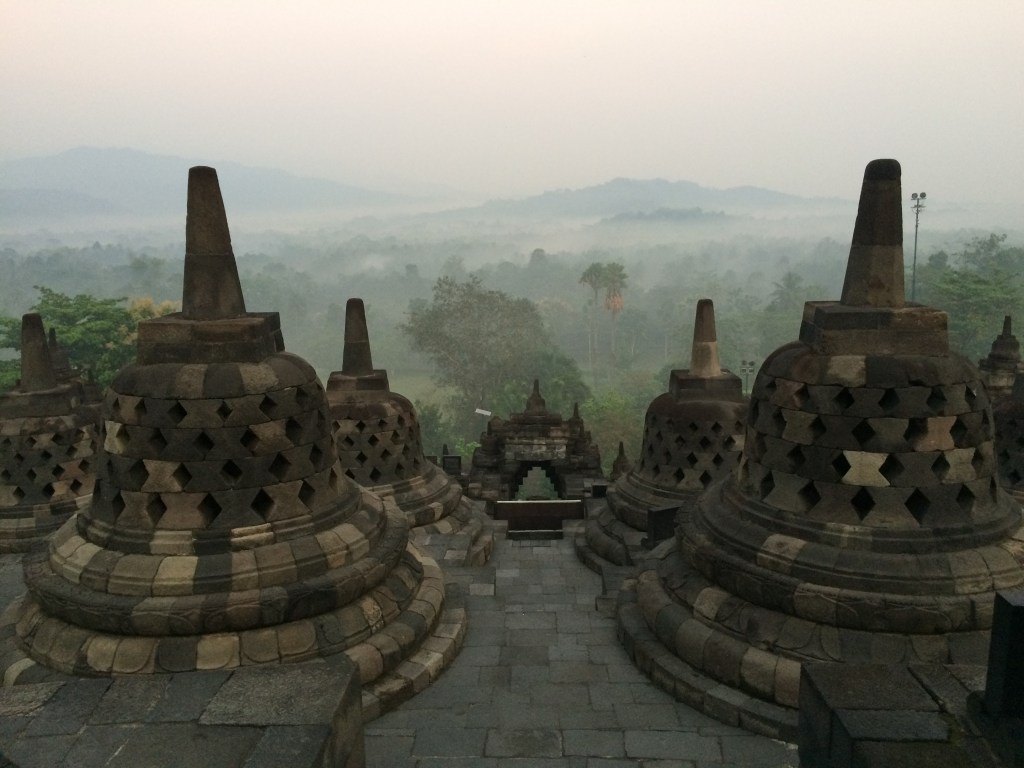
In the late eighth century the Sailendra dynasty based on the island of Java ruled much of South-East Asia. Javanese indigenous religion was mixed with Saivism (Hindu worship of Shiva), as well as Mahayana (specifically, Vajrayana) Buddhism, to produce a syncretic Tantric culture. Sometime about 800 CE, around when Charlemagne was being crowned Holy Roman Emperor in Rome, one of the greatest Buddhist structures ever built was being constructed in Central Java.
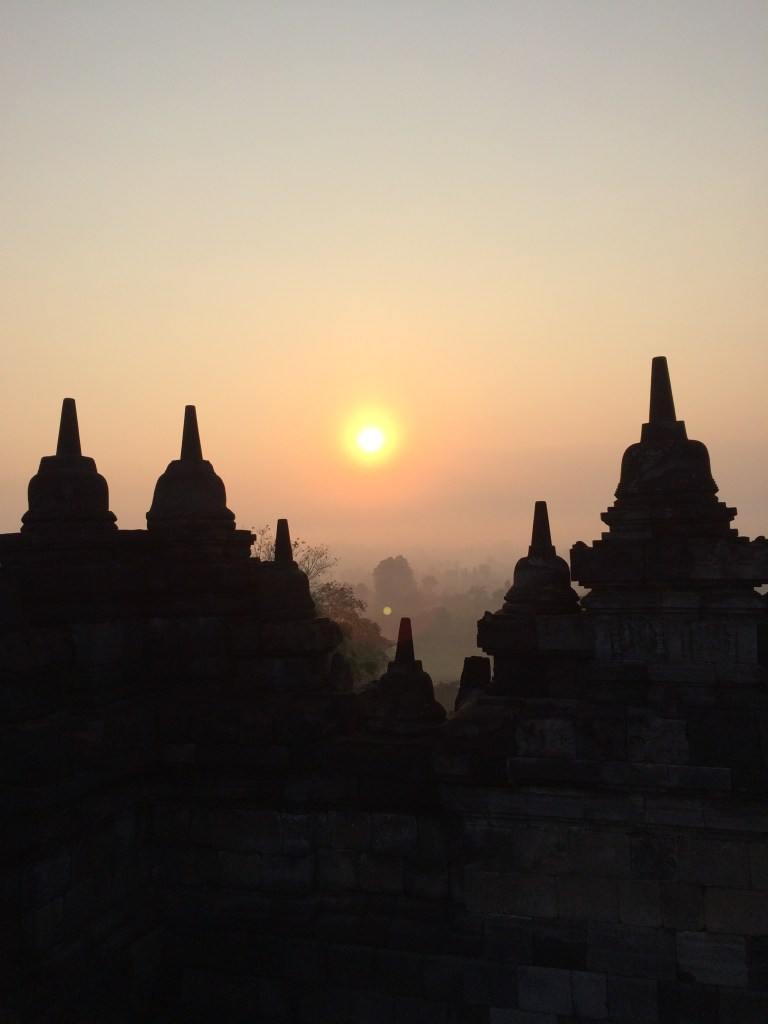
Borobudur Temple was built to represent the three-tiered universe of Buddhist cosmology in the form of a lotus mandala; from the bottom up, the sphere of desire, the sphere of forms, and the sphere of formlessness. 72 stupas each contain a statue of Buddha and carved stone reliefs depict scenes from the sutras. The temple complex was abandoned in the 15th century, rediscovered by the British in 1814, and restoration was completed in the 20th century. Watching the sun rise over the temple is an unforgettable experience.
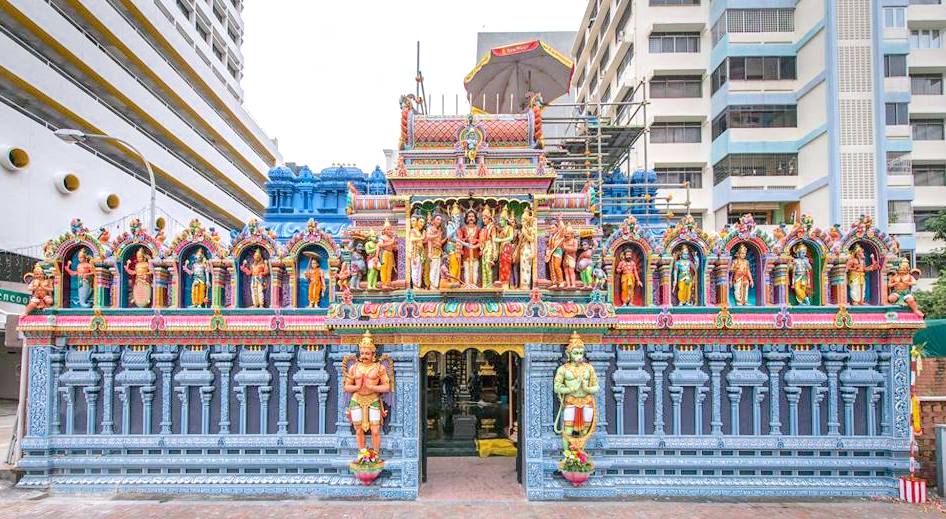
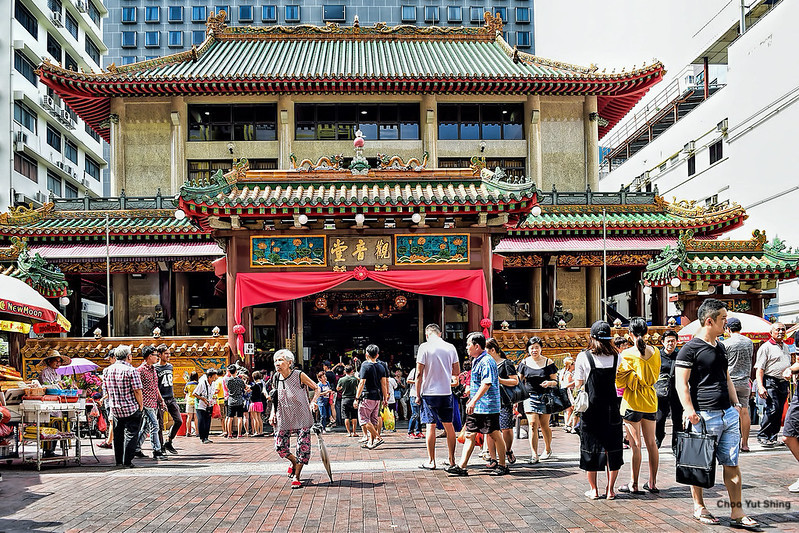
The Hindu Sri Krishnan Temple and the adjacent Chinese Buddhist Kwan Im Thong Hood Cho Temple on Waterloo Street, Singapore, are famous for encouraging cross-worship in a cultural melting pot. Of course, contemporary Hindus generally consider Buddhism to be a form of Hinduism, and Buddha is a respected teacher. In Vaishnava Hinduism, Buddha is considered to be the most recent avatar of the god Vishnu. Buddhists, likewise, honor the Brahmanic tradition as the foundation of the Buddha’s learning.
On Waterloo Street, The Hindu deity Krishna is worshipped right next to a statue of the Chinese goddess of mercy Guanyin, Shakyamuni Buddha and the founder of Chan (Zen), Bodhidharma. The aroma of incense from joss sticks stuck in incense burners fills the air along the street, flowers and mementos, including Daoist gourds, are sold in stalls up and down the way.
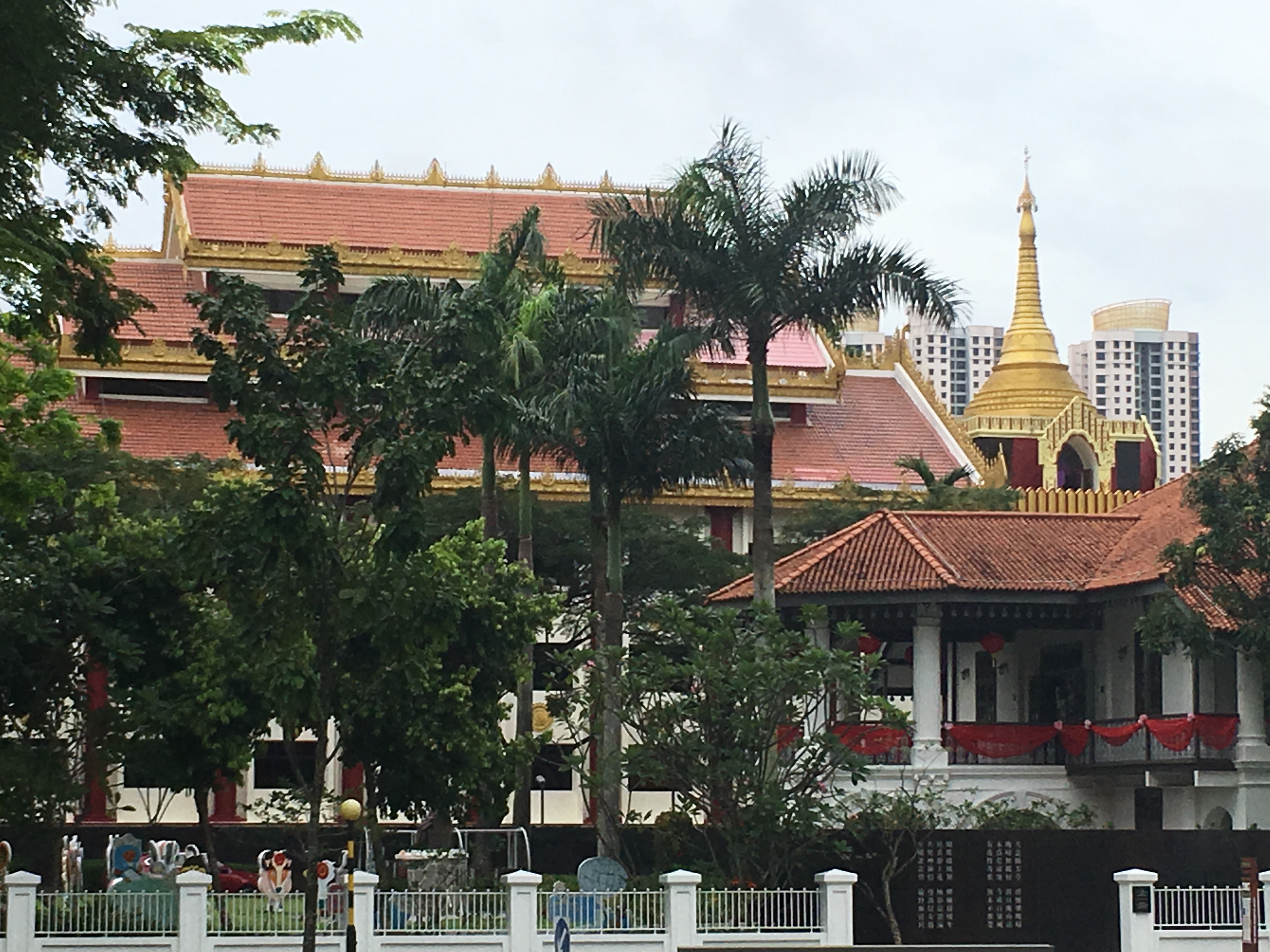
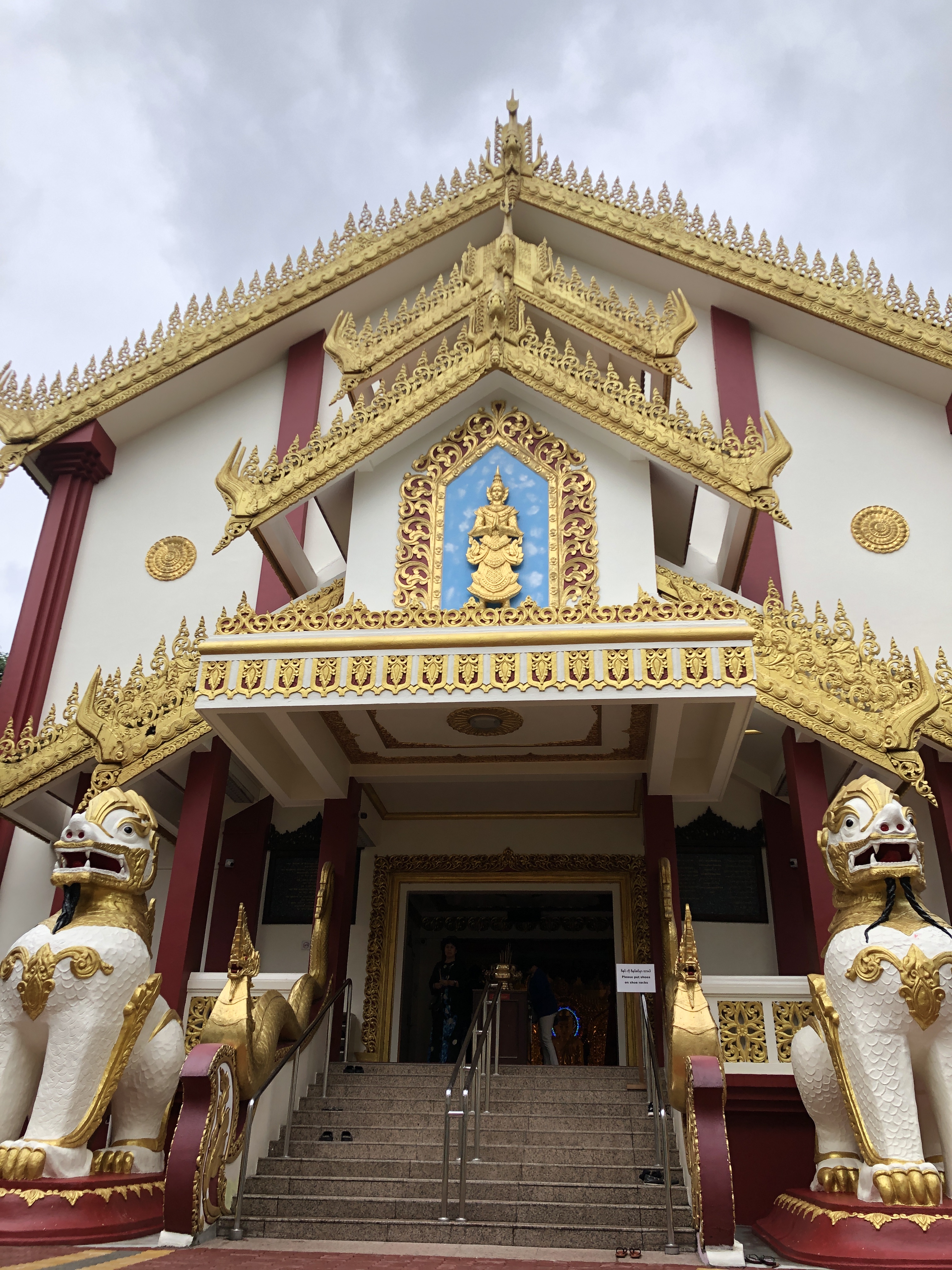
One fine day in Singapore we stayed at a hotel next to the Burmese Buddhist Temple and Wan Qing Yuan – Sun Yat Sen Nanyang Memorial Hall. Buddhists in Myanmar (Burma) follow the Theravada tradition and usually practice vipassana, insight meditation, although some adhere to the weizza path, an esoteric Buddhism involving samatha (tranquility meditation), chanting spells and alchemy. Sun Yat Sen (1866–1925) made many visits to Singapore, which has a large Chinese population. He is revered as the first leader of the Kuomintang (Nationalist Party of China) and the “Father of the Nation” in the Republic of China.
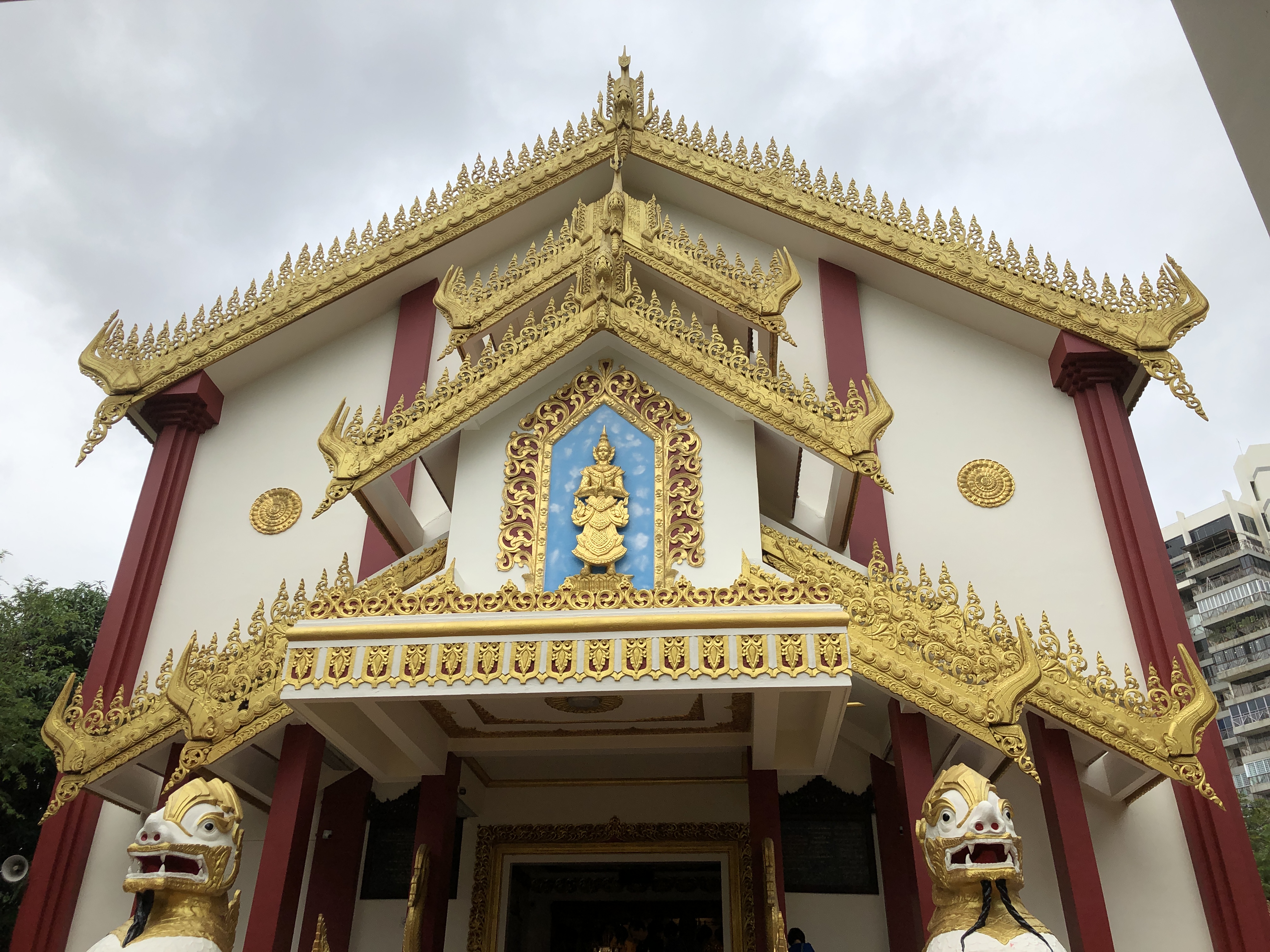
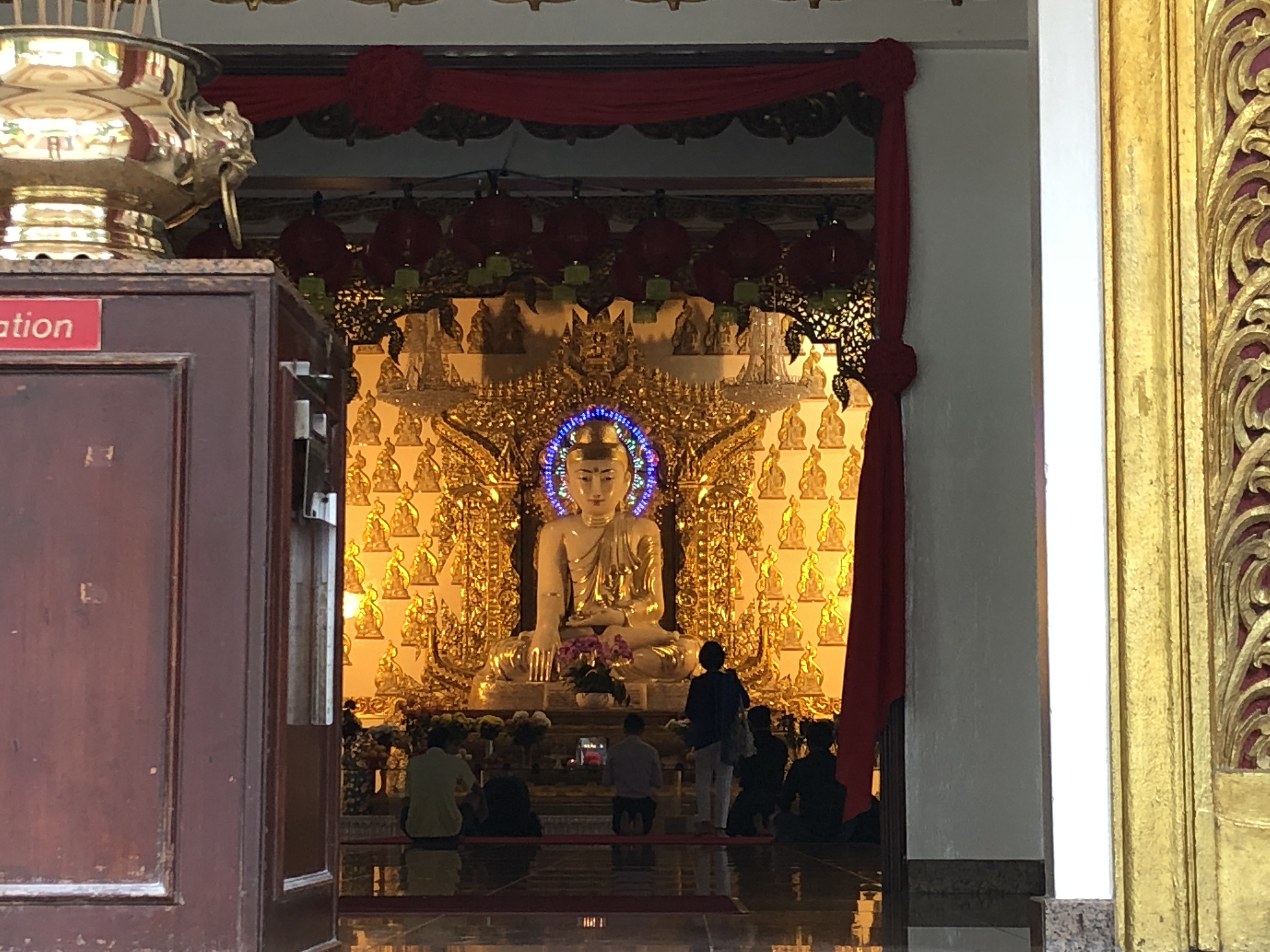
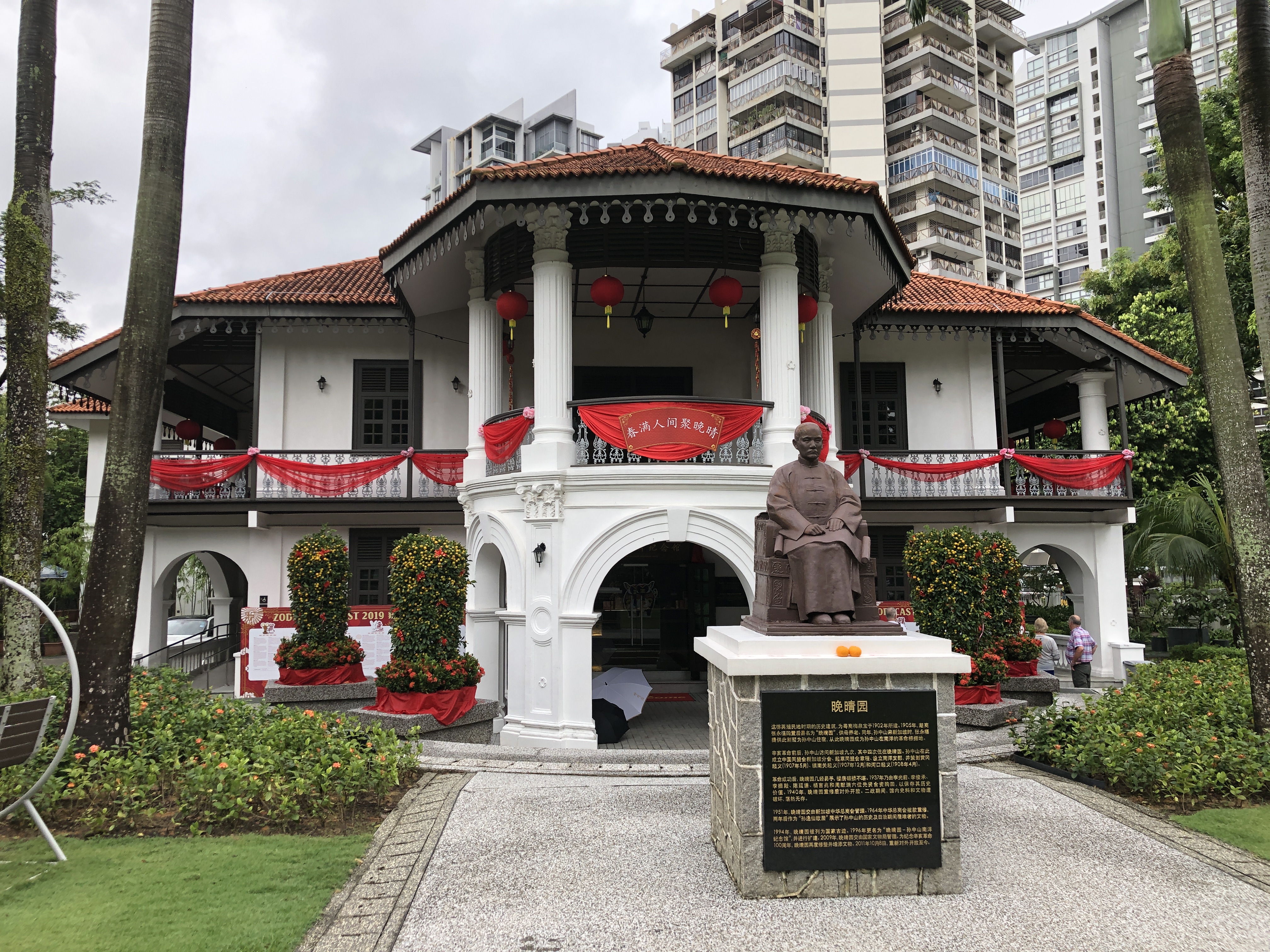
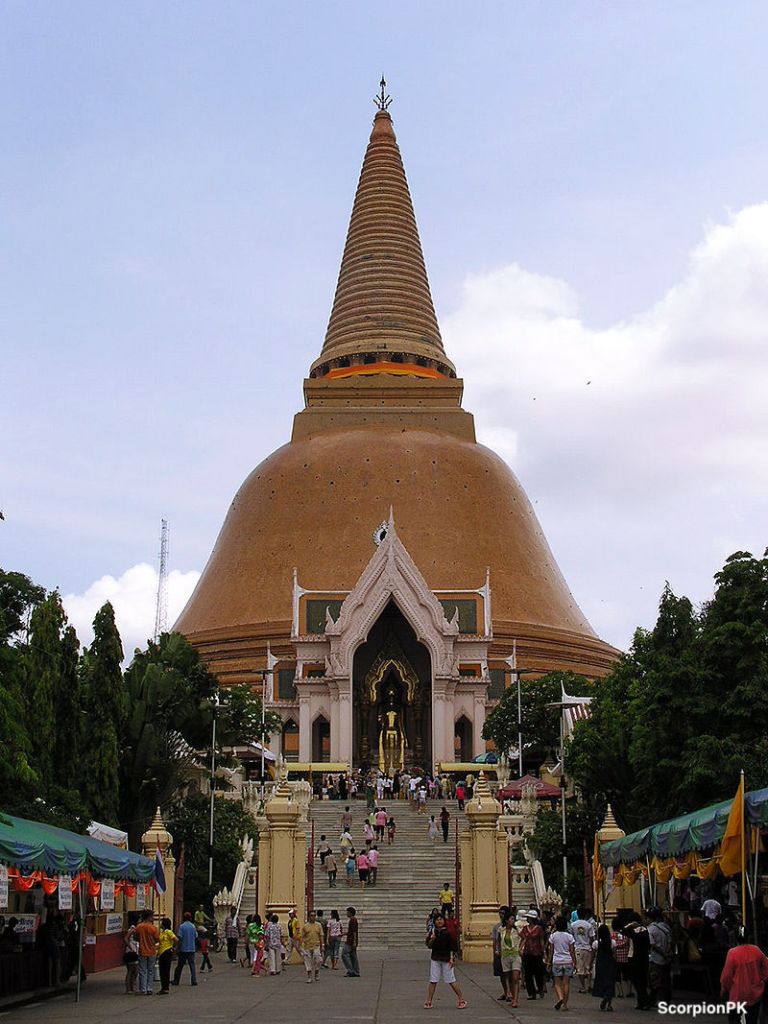
Early Buddhist architecture was marked by three types of construction. Stupas were originally built to hold the ash remains of the Buddha after he died. Later they were used to store relics from venerated Buddhists, whether it be bones, clothing or basic possessions. While in Thailand we drove past the town of Nakhon Pathom and caught a glimpse of the Phra Pathommachedi, the largest stupa in Thailand, over 120 meters tall. The original stupa was built circa 193 BCE on the temple grounds of Wat Phra Pathom, established about 325 BCE.
While the Sailendras were building Borobudur on Java, they held hostage a Cambodian prince by the name of Jayavarman. When the prince was returned home, he founded the Khmer empire, ruling over what is today Cambodia, Thailand, Vietnam and Laos. He brought with him from Java the worship of the Hindu deities Shiva and Vishnu, as well as the concept of the god-king.
The capital of the empire was known as Yasodharapura, today Angkor, and was renowned for its temple architecture. The Angkor Wat, built in the 12th century, is still the largest religious structure on earth. It was during this time that the royal temples began to adopt elements of Buddhism. This empire stood until it was dismantled by the kingdom of Siam (Thailand) in the 15th century.
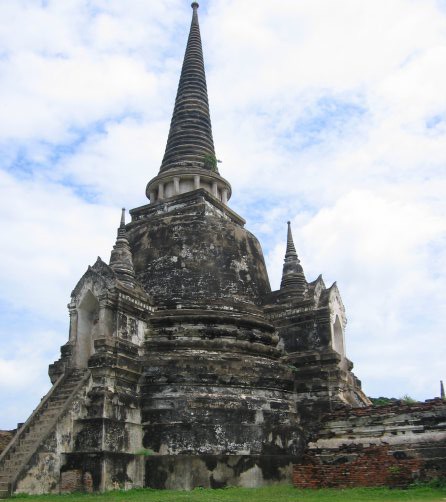
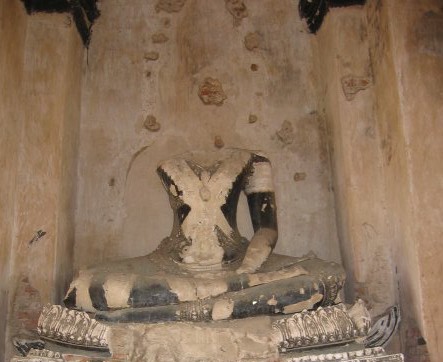
The kingdom of Thailand, anciently known as Siam, adopted Buddhism during the lifetime of the Indian Emperor Ashoka, around the middle of the 3rd century BCE. Almost 95% of the Thai population today follows Theravada Buddhism. On our visit we spent a day at Wat Phra Si Sanphet, the ancient temple ruin at Ayutthaya, the capital of Siam 1350-1767. This wat (temple) was once the holiest temple on the site of the former royal palace.
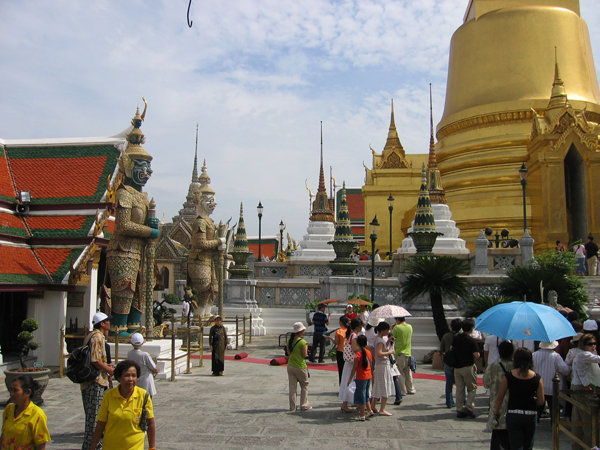
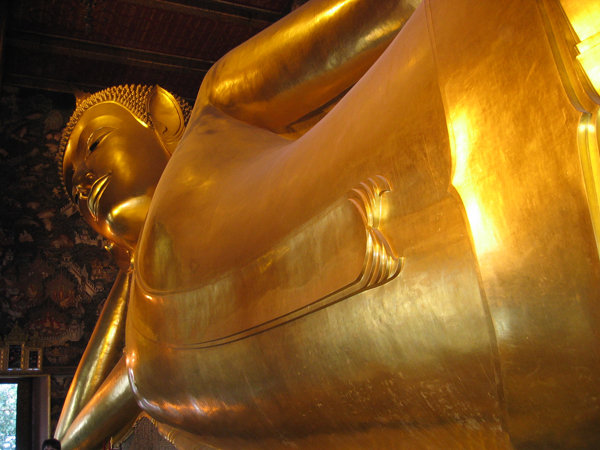
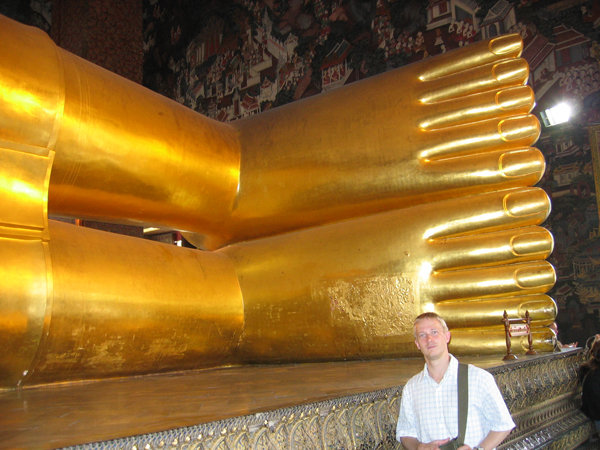
We also visited Wat Pho, the royal temple complex next to the Grand Palace in Bangkok, the official home of the kings of Siam (Thailand) since 1782. This temple complex boasts the largest collection of Buddha images in the country and is home to the 46 meter long Reclining Buddha statue. The Buddha reclined in this pose, the Sleeping Lion’s Posture, when he lay on his deathbed. Those who experience too much pain in other postures use the lion’s posture for meditation.
I have just touched the tip of the iceberg, so to speak, of the Southeast Asian temple landscape. There are numerous ancient sacred sites hidden in the beautiful, vast tropical jungle terrains right here on the island of Java, where I have pitched my tent for a long season. There are so many more on nearby Bali, not to mention Thailand, Myanmar, Vietnam and other countries in the region. Moving on, though, my next post will explore some key Chinese Daoist and Buddhist temples both on the Chinese mainland and abroad.
Featured Photo (Top of Page) by Paolo Nicolello on Unsplash

 Temples Along the Way